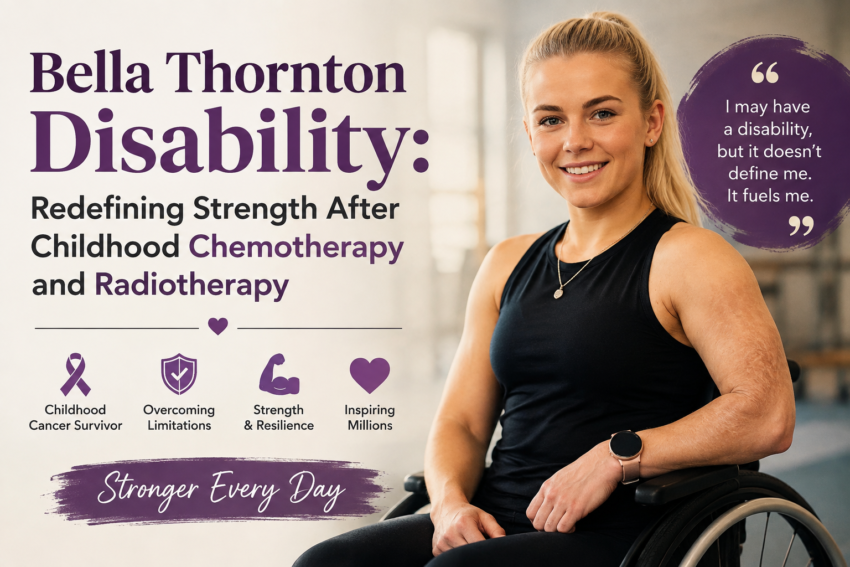
The search for Bella Thornton disability: Redefining Strength After Childhood Chemotherapy and Radiotherapy requires careful attention because several people appear to share the name Bella Thornton. Online articles have connected the name with disability advocacy and childhood health experiences, while other sources use the same name for Billy Bob Thornton’s daughter. These are not necessarily the same person, and combining their stories can create inaccurate information.
When discussing disability, cancer treatment, or childhood medical experiences, accuracy and respect are especially important. Publicly available sources do not reliably establish that Billy Bob Thornton’s daughter experienced childhood chemotherapy or radiotherapy. Recent reporting instead highlights the identity confusion surrounding different people with the same name.
Understanding the Bella Thornton Disability Search
The phrase “Bella Thornton disability” has gained attention because search results can bring together information belonging to different individuals. One Bella Thornton has been described online in connection with disability advocacy and personal health experiences, while Billy Bob Thornton’s daughter has a separate biography and has generally maintained a private life.
This distinction matters because health information should never be transferred from one person to another simply because their names match. A responsible biography should identify the individual clearly before discussing medical history, disability, education, career achievements, or family background.
Childhood Cancer Treatment and Its Long-Term Impact
Childhood cancer treatment can involve demanding medical procedures, including chemotherapy and radiotherapy, depending on the diagnosis and treatment plan. Survivors may experience different long-term effects, but those effects vary considerably from one person to another.
Some survivors may experience physical changes, fatigue, difficulties associated with previous treatment, or emotional challenges. Others may recover without significant long-term limitations. This is why it is important not to assume that every person who received cancer treatment will experience disability or the same recovery journey.
Redefining Strength After Serious Illness
Stories about childhood illness often highlight an important idea: strength is not simply the absence of difficulty. For people who have faced serious health challenges, strength can involve adapting to change, continuing education, developing relationships, pursuing creative goals, or simply moving forward one day at a time.
Disability awareness also encourages society to look beyond diagnoses. A person’s abilities, interests, personality, and achievements are not defined solely by a medical condition. When discussing someone’s health journey, respectful language should recognize the whole person rather than reducing their identity to illness.
Why Online Health Information Can Become Confusing
The internet makes it easy for information to be copied from one website to another. When two people share a name, an inaccurate biography can quickly become repeated across multiple pages. Later articles may cite earlier articles without checking the original source, making an unverified claim appear established.
This appears particularly relevant to searches involving Bella Thornton. Current online reporting specifically warns that information about different people with the same name has been mixed together.
Bella Thornton and Public Privacy
Billy Bob Thornton’s daughter Bella Thornton has largely remained outside the public spotlight. Publicly available biographical information identifies her as the daughter of Billy Bob Thornton and Connie Angland, and sources have discussed her education and creative interests. IMDb also lists a different Bella Thornton as an actress and filmmaker, illustrating how easily name-based searches can become complicated.
For this reason, claims about disability or childhood medical treatment should not be attributed to Billy Bob Thornton’s daughter without direct, reliable evidence. Personal medical information deserves particular care, especially when the individual has not publicly established those details.
The Importance of Accurate Disability Representation
Accurate disability representation begins with listening to people who have actually experienced disability rather than relying on assumptions. It also requires distinguishing between a medical diagnosis, a treatment history, a long-term health condition, and disability status.
A person may have undergone intensive medical treatment without considering themselves disabled. Another person may develop a disability following treatment. Both experiences are valid, but they should not be assumed or combined without evidence.
What Readers Can Learn From the Confusion
The Bella Thornton story demonstrates why source checking is important when researching people online. Before accepting a health-related claim, readers should verify the person’s identity, look for reputable sources, check whether the information comes directly from the individual, and avoid treating copied celebrity websites as medical evidence.
This approach is especially valuable when researching childhood cancer, chemotherapy, radiotherapy, disability, or other sensitive subjects. Accurate information protects both readers and the people being discussed.
A Broader Message About Resilience
Regardless of which Bella Thornton a particular source is discussing, stories involving serious illness and disability can encourage broader conversations about resilience, accessibility, and inclusion. Recovery is rarely a simple or identical experience, and people may define strength in very different ways.
The most meaningful stories are those that allow individuals to describe their experiences in their own words. They can show that a challenging childhood or health journey does not have to determine someone’s future, while also avoiding exaggerated or unsupported claims.
Conclusion
The topic Bella Thornton disability: Redefining Strength After Childhood Chemotherapy and Radiotherapy needs careful treatment because available online information appears to combine multiple people named Bella Thornton. There is no reliable public evidence establishing that Billy Bob Thornton’s daughter had childhood chemotherapy or radiotherapy, so those claims should not be presented as confirmed facts.
The larger lesson is about responsible storytelling. Childhood illness, cancer treatment, and disability can profoundly affect people’s lives, but every person’s experience is different. Accurate identification, respectful language, and reliable sourcing allow these stories to inspire readers without turning speculation into biography.
FAQs
Does Bella Thornton have a disability?
There is no reliable public evidence confirming that Billy Bob Thornton’s daughter Bella Thornton has a physical disability. Online information appears to involve more than one person with the same name.
Did Bella Thornton undergo chemotherapy and radiotherapy as a child?
There is not sufficient reliable evidence to establish this claim about Billy Bob Thornton’s daughter. It should not be presented as a confirmed part of her biography.
Why is there confusion about Bella Thornton?
Several people appear to share the name Bella Thornton, including Billy Bob Thornton’s daughter and other individuals associated with creative work or disability-related stories.
Is every online biography about Bella Thornton referring to the same person?
No. Different people with the same name appear in search results, so identifying information must be checked carefully before accepting a biography.
Can childhood cancer treatment cause long-term health effects?
It can. The effects depend on factors such as the cancer, treatment type, dosage, age, and individual circumstances. Not every childhood cancer survivor experiences the same long-term effects.
Does receiving cancer treatment automatically mean someone has a disability?
No. Medical treatment and disability are not interchangeable concepts. Disability depends on how a person’s health condition affects their functioning and individual circumstances.
Why is accurate disability reporting important?
Accurate reporting prevents misinformation and respects people’s privacy. It also helps readers understand disability without relying on stereotypes or unsupported assumptions.
What is the main lesson from the Bella Thornton story?
The key lesson is to verify identity and sources before publishing sensitive claims about someone’s health, disability, or childhood medical history.